Advanced mortgage strategies from a twenty-year strategist. Written to help you pay off sooner, save more, and retire three to four times wealthier — without paying more each month.
Trump's Canada Tariffs Created a Structural Problem the U.S. Alcohol Industry Can't Reverse
Trump's Canada Tariffs Created a Structural Problem the U.S. Alcohol Industry Can't Reverse
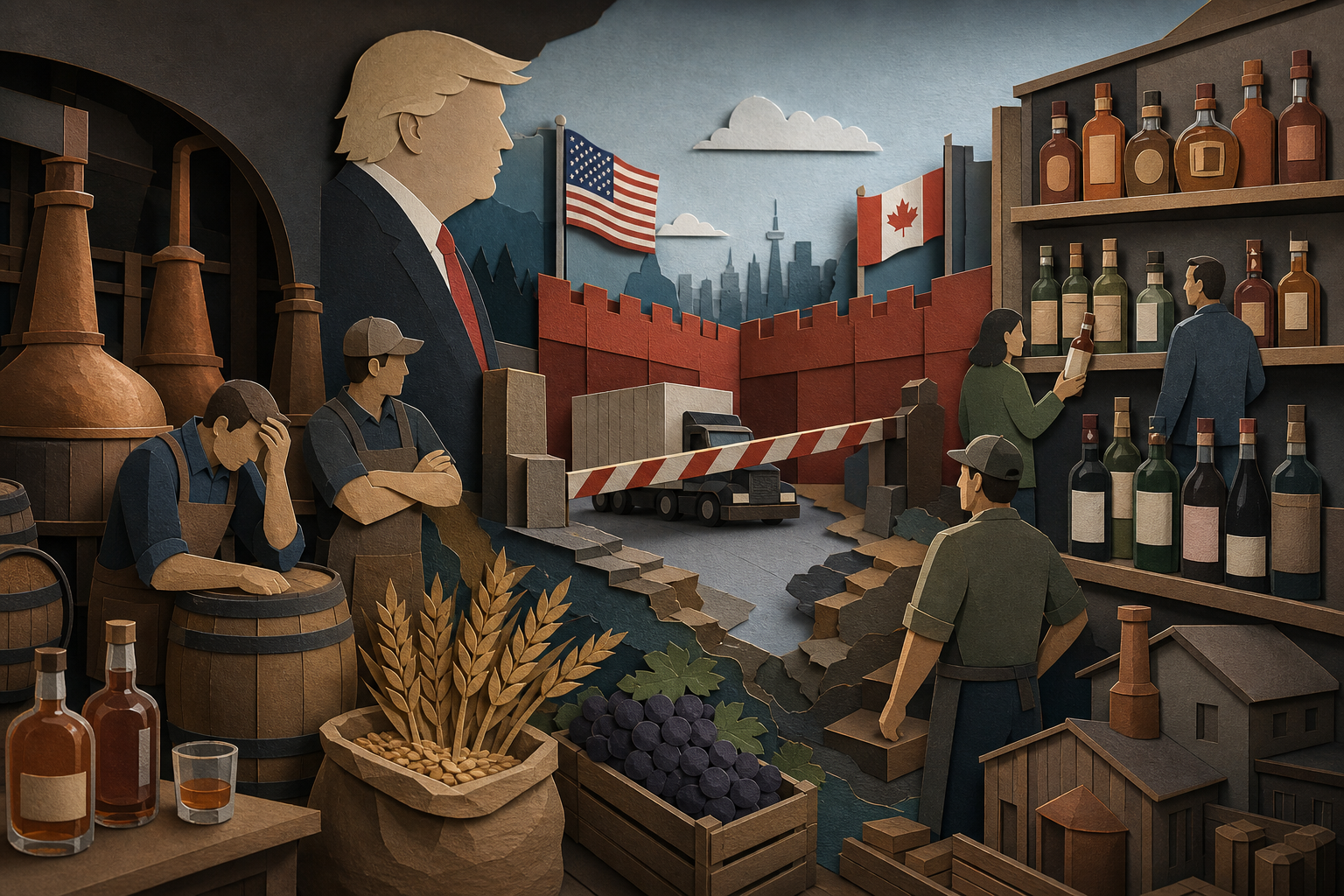
In February 2025, when the 25 per cent tariffs went into effect, Kentucky bourbon distillers were already bracing for retaliation. They'd lived through this once before, 2018 to 2021, when the EU and Canada both targeted American whiskey with counter-tariffs. During that stretch, bourbon exports to Canada dropped between 20 and 30 per cent, depending on the label. Most of that volume never came back.
What came back instead were competitors. Canadian retailers, facing price-shocked American products, expanded their Scottish single malt sections. They brought in Australian wine. They gave local craft distilleries better shelf placement. By the time the first trade war cooled off in 2021, the damage wasn't just lost revenue. It was lost real estate, literal shelf space, that took years to win in the first place and weeks to lose.
The Ghost of 2018
The Distilled Spirits Council warned about this exact pattern when the tariff threat resurfaced in late 2024. Their data was clear: U.S. spirits exports to Canada were worth over $500 million annually, making Canada the top foreign buyer of American whiskey. Wine was another $450 million, the most stable international market for California producers already dealing with a domestic consumption slide. Lose Canada, and you aren't shifting that volume to Europe or Asia on short notice. You're eating the surplus.
Canada's retaliation followed the script from last time. They didn't tariff industrial inputs or commodities. They went straight for the cultural products, bourbon, Tennessee whiskey, craft beer, premium wine, the kind of goods that carry political weight because they come from specific congressional districts. A 25 per cent tariff on Jack Daniel's isn't trade policy. It's a signal to Tennessee voters.
Brown-Forman can absorb that hit for a while. The margins on premium spirits are wide enough to take a quarter-point haircut without closing plants. But for a craft distillery in Michigan or a small-batch bourbon house in Indiana, losing the Canadian export channel isn't a margin squeeze. It's binary. The business model either works without that revenue or it doesn't.
What Doesn't Come Back
The part of this cycle that doesn't show up in the year-over-year export charts is consumer habit formation. A Toronto buyer who switches from a $65 California Cabernet to a $48 Ontario VQA or a $52 Australian Shiraz because of price doesn't automatically switch back when tariffs lift. Wine is a low-involvement purchase for most consumers. They find something they like at a price that works, and they stop looking.
Premium spirits have more brand loyalty, but even there, the threshold matters. Pushing a $70 bourbon to $87.50 crosses a psychological line. The buyer trades down to Canadian rye or a cheaper domestic option. Six months later, when the tariff comes off and the bourbon drops back to $70, the buyer has already replaced the habit.
The industry calls this market share erosion, and it's stickier than the revenue loss itself. Reclaiming a percentage point of market share costs more than defending it in the first place. Promotional spend, distributor incentives, retail placement fees, all of it has to be re-negotiated from a weaker position.
Aluminum and Malted Barley
Then there's the input side. A meaningful chunk of U.S. craft brewers rely on Canadian malted barley and aluminum cans. Tariffs on Canadian aluminum, consistently part of the package in both 2018 and 2025, raise the cost of goods sold for every canned beverage producer in the U.S. That's not retaliation. That's self-inflicted margin compression on an industry already operating in single-digit net margins.
The leverage argument for tariffs assumes the pain is temporary and one-sided. The structural argument against them is that some damage doesn't reverse. Shelf space, once lost, requires capital and time to reclaim. Consumer habits, once shifted, exhibit inertia. The distillery aging warehouses built in 2015 on export growth assumptions still carry debt in 2026, but the export market they were financing is smaller now. That's the problem. Not the tariff rate. The fact that the market shape changed while the balance sheet didn't.



Trump's Canada Tariffs Created a Structural Problem the U.S. Alcohol Industry Can't Reverse
In February 2025, when the 25 per cent tariffs went into effect, Kentucky bourbon distillers were already bracing for retaliation. They'd lived through this once before, 2018 to 2021, when the EU and Canada both targeted American whiskey with counter-tariffs. During that stretch, bourbon exports to Canada dropped between 20 and 30 per cent, depending on the label. Most of that volume never came back.
What came back instead were competitors. Canadian retailers, facing price-shocked American products, expanded their Scottish single malt sections. They brought in Australian wine. They gave local craft distilleries better shelf placement. By the time the first trade war cooled off in 2021, the damage wasn't just lost revenue. It was lost real estate, literal shelf space, that took years to win in the first place and weeks to lose.
The Ghost of 2018
The Distilled Spirits Council warned about this exact pattern when the tariff threat resurfaced in late 2024. Their data was clear: U.S. spirits exports to Canada were worth over $500 million annually, making Canada the top foreign buyer of American whiskey. Wine was another $450 million, the most stable international market for California producers already dealing with a domestic consumption slide. Lose Canada, and you aren't shifting that volume to Europe or Asia on short notice. You're eating the surplus.
Canada's retaliation followed the script from last time. They didn't tariff industrial inputs or commodities. They went straight for the cultural products, bourbon, Tennessee whiskey, craft beer, premium wine, the kind of goods that carry political weight because they come from specific congressional districts. A 25 per cent tariff on Jack Daniel's isn't trade policy. It's a signal to Tennessee voters.
Brown-Forman can absorb that hit for a while. The margins on premium spirits are wide enough to take a quarter-point haircut without closing plants. But for a craft distillery in Michigan or a small-batch bourbon house in Indiana, losing the Canadian export channel isn't a margin squeeze. It's binary. The business model either works without that revenue or it doesn't.
What Doesn't Come Back
The part of this cycle that doesn't show up in the year-over-year export charts is consumer habit formation. A Toronto buyer who switches from a $65 California Cabernet to a $48 Ontario VQA or a $52 Australian Shiraz because of price doesn't automatically switch back when tariffs lift. Wine is a low-involvement purchase for most consumers. They find something they like at a price that works, and they stop looking.
Premium spirits have more brand loyalty, but even there, the threshold matters. Pushing a $70 bourbon to $87.50 crosses a psychological line. The buyer trades down to Canadian rye or a cheaper domestic option. Six months later, when the tariff comes off and the bourbon drops back to $70, the buyer has already replaced the habit.
The industry calls this market share erosion, and it's stickier than the revenue loss itself. Reclaiming a percentage point of market share costs more than defending it in the first place. Promotional spend, distributor incentives, retail placement fees, all of it has to be re-negotiated from a weaker position.
Aluminum and Malted Barley
Then there's the input side. A meaningful chunk of U.S. craft brewers rely on Canadian malted barley and aluminum cans. Tariffs on Canadian aluminum, consistently part of the package in both 2018 and 2025, raise the cost of goods sold for every canned beverage producer in the U.S. That's not retaliation. That's self-inflicted margin compression on an industry already operating in single-digit net margins.
The leverage argument for tariffs assumes the pain is temporary and one-sided. The structural argument against them is that some damage doesn't reverse. Shelf space, once lost, requires capital and time to reclaim. Consumer habits, once shifted, exhibit inertia. The distillery aging warehouses built in 2015 on export growth assumptions still carry debt in 2026, but the export market they were financing is smaller now. That's the problem. Not the tariff rate. The fact that the market shape changed while the balance sheet didn't.
Read Next
Canada's Big Six banks hit $37.5 billion in impaired loans, triple pre-pandemic levels
Your 2.5% Mortgage Rate and Ontario Divorce: 7 Ways to Keep or Share It
Fixed Mortgage Rates Climb as Bond Yields Erase Discount Room
Manulife One at 4.95% vs. Five-Year Fixed at 3.94%: The Shrinking Cash Flow Advantage