Advanced mortgage strategies from a twenty-year strategist. Written to help you pay off sooner, save more, and retire three to four times wealthier — without paying more each month.
Trump's 'Forced Labour' Tariffs Hit Canada, But the Real Target Is China
Trump's 'Forced Labour' Tariffs Hit Canada, But the Real Target Is China
The 10 per cent global baseline duty expired on July 25, 2026. What replaced it was sharper: a tariff regime targeting dozens of countries for "failing to crack down on goods produced with forced labour," with Canada sitting on the list alongside the actual offenders. The timing wasn't subtle, these duties launched the day after the old ones lapsed, maintaining continuous pressure without a gap in the enforcement calendar.
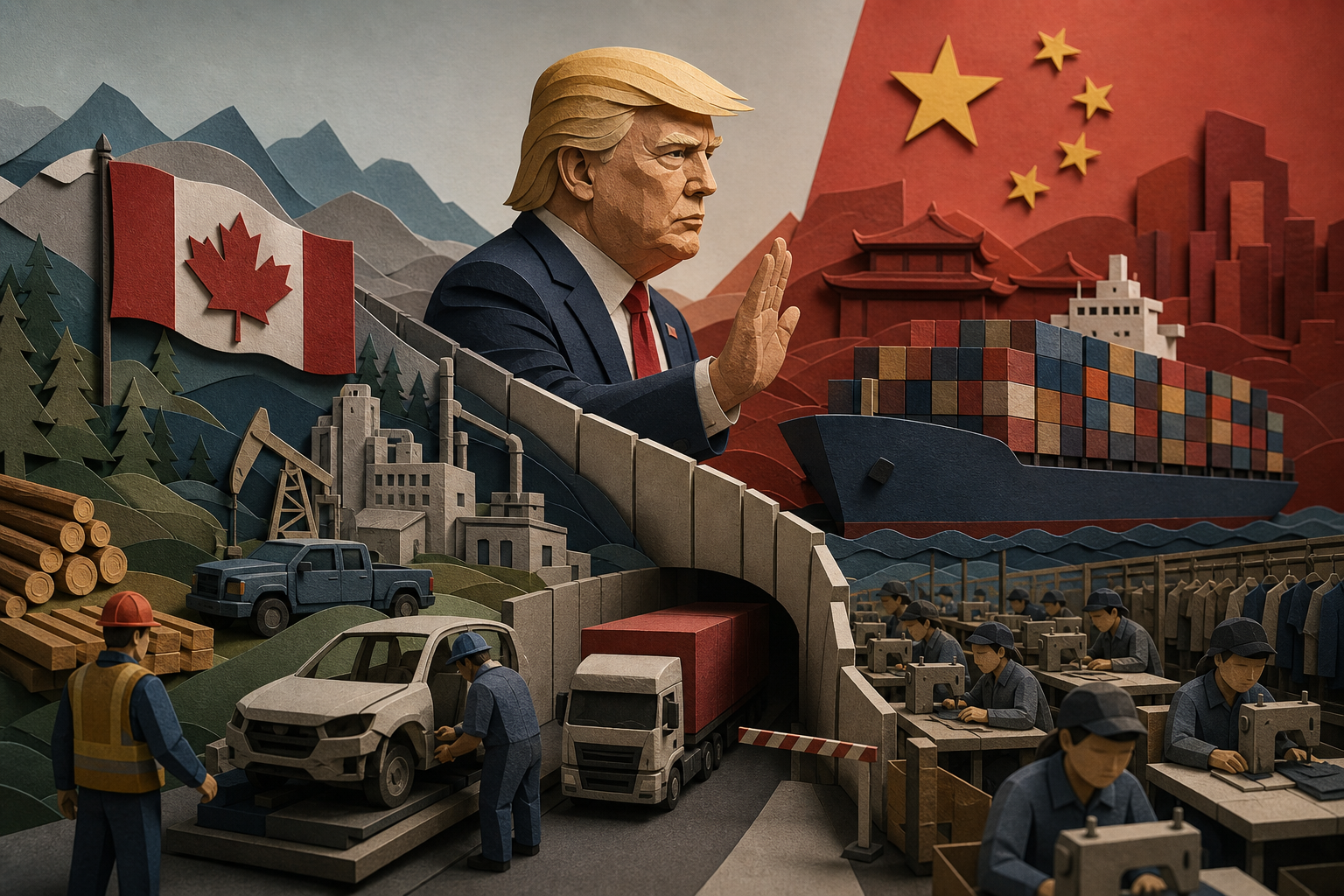
The White House framed the move as a human rights intervention. The real architecture is trade decoupling. By wrapping protectionism in ethical sourcing language, the administration sidesteps certain World Trade Organization dispute pathways that apply cleanly to national security claims but get muddier when human rights enter the justification. China is the structural target. Canada is collateral damage in a realignment strategy that views continental proximity and the USMCA as insufficient shields against "America First" enforcement.
The Forced Labour Pivot Changes the Legal Terrain
Section 232 tariffs relied on national security arguments. Those are reviewable under WTO frameworks and domestically vulnerable to court challenges when the security rationale is thin. Forced labour duties draw from the 1930 Tariff Act and the more recent Uyghur Forced Labor Prevention Act (UFLPA), which gives U.S. Customs and Border Protection broad authority to seize shipments based on risk profiling rather than documented proof. The burden of proof flips: exporters must demonstrate compliance rather than customs proving a violation.
Canada passed Bill S-211 in 2023, mandating supply chain transparency reports from large firms starting in 2024. The U.S. position, implicit in the tariff list, is that reporting requirements aren't enforcement. CBP now treats "modern slavery legislation" as table stakes, not evidence of clean supply chains. The practical effect: Canadian exporters in sectors with complex Asian sourcing, auto parts, electronics, textiles, face the same scrutiny as goods shipped directly from high-risk jurisdictions.
Why Canada Gets Hit Despite Geographic Logic
Bilateral trade between Canada and the U.S. runs near $1.3 trillion annually. Most of that is regionally integrated supply chains where components cross the border multiple times before final assembly. Lumber, energy, auto parts, these aren't consumer electronics with opaque Asian subcontractors, but the tariff mechanism doesn't differentiate by sector risk. It applies at the country level based on Washington's assessment of national enforcement adequacy.
The signal being sent isn't about Canadian mills or Alberta oil sands. It's about Tier 2 and Tier 3 suppliers in industries where Chinese components enter North American production through Canadian intermediaries. CBP's algorithmic risk models flag shipments not just by origin but by end-to-end pathway. A Montreal manufacturer sourcing subcomponents from Shenzhen now shares risk categorization with direct Chinese imports, regardless of what S-211 requires the firm to report.
The Retaliation Risk No One Wants
Ottawa deployed dollar-for-dollar countermeasures in 2018 when steel and aluminum tariffs hit. That worked because the dispute was narrow and the economic pain was bilateral. Retaliating now, during an inflationary cycle where both economies are fragile, risks a broader trade war that neither government can afford but both may be politically required to pursue. The Canadian government faces pressure to respond visibly. The U.S. administration is betting Ottawa won't escalate because the cost of full decoupling exceeds the cost of compliance theater.
The real calculation isn't about Canada. It's about building enforcement precedent that applies cleanly to China without naming China in every tariff order. The forced labour justification creates a compliance standard no major manufacturing economy can meet perfectly, which means Washington holds permanent discretionary authority to impose duties whenever leverage is needed. Canada's inclusion demonstrates that standard applies even to allies.
The USMCA promised stable terms. The 2026 tariff calendar suggests agreements are stable only until the next executive order.



Trump's 'Forced Labour' Tariffs Hit Canada, But the Real Target Is China
The 10 per cent global baseline duty expired on July 25, 2026. What replaced it was sharper: a tariff regime targeting dozens of countries for "failing to crack down on goods produced with forced labour," with Canada sitting on the list alongside the actual offenders. The timing wasn't subtle, these duties launched the day after the old ones lapsed, maintaining continuous pressure without a gap in the enforcement calendar.
The White House framed the move as a human rights intervention. The real architecture is trade decoupling. By wrapping protectionism in ethical sourcing language, the administration sidesteps certain World Trade Organization dispute pathways that apply cleanly to national security claims but get muddier when human rights enter the justification. China is the structural target. Canada is collateral damage in a realignment strategy that views continental proximity and the USMCA as insufficient shields against "America First" enforcement.
The Forced Labour Pivot Changes the Legal Terrain
Section 232 tariffs relied on national security arguments. Those are reviewable under WTO frameworks and domestically vulnerable to court challenges when the security rationale is thin. Forced labour duties draw from the 1930 Tariff Act and the more recent Uyghur Forced Labor Prevention Act (UFLPA), which gives U.S. Customs and Border Protection broad authority to seize shipments based on risk profiling rather than documented proof. The burden of proof flips: exporters must demonstrate compliance rather than customs proving a violation.
Canada passed Bill S-211 in 2023, mandating supply chain transparency reports from large firms starting in 2024. The U.S. position, implicit in the tariff list, is that reporting requirements aren't enforcement. CBP now treats "modern slavery legislation" as table stakes, not evidence of clean supply chains. The practical effect: Canadian exporters in sectors with complex Asian sourcing, auto parts, electronics, textiles, face the same scrutiny as goods shipped directly from high-risk jurisdictions.
Why Canada Gets Hit Despite Geographic Logic
Bilateral trade between Canada and the U.S. runs near $1.3 trillion annually. Most of that is regionally integrated supply chains where components cross the border multiple times before final assembly. Lumber, energy, auto parts, these aren't consumer electronics with opaque Asian subcontractors, but the tariff mechanism doesn't differentiate by sector risk. It applies at the country level based on Washington's assessment of national enforcement adequacy.
The signal being sent isn't about Canadian mills or Alberta oil sands. It's about Tier 2 and Tier 3 suppliers in industries where Chinese components enter North American production through Canadian intermediaries. CBP's algorithmic risk models flag shipments not just by origin but by end-to-end pathway. A Montreal manufacturer sourcing subcomponents from Shenzhen now shares risk categorization with direct Chinese imports, regardless of what S-211 requires the firm to report.
The Retaliation Risk No One Wants
Ottawa deployed dollar-for-dollar countermeasures in 2018 when steel and aluminum tariffs hit. That worked because the dispute was narrow and the economic pain was bilateral. Retaliating now, during an inflationary cycle where both economies are fragile, risks a broader trade war that neither government can afford but both may be politically required to pursue. The Canadian government faces pressure to respond visibly. The U.S. administration is betting Ottawa won't escalate because the cost of full decoupling exceeds the cost of compliance theater.
The real calculation isn't about Canada. It's about building enforcement precedent that applies cleanly to China without naming China in every tariff order. The forced labour justification creates a compliance standard no major manufacturing economy can meet perfectly, which means Washington holds permanent discretionary authority to impose duties whenever leverage is needed. Canada's inclusion demonstrates that standard applies even to allies.
The USMCA promised stable terms. The 2026 tariff calendar suggests agreements are stable only until the next executive order.
Read Next
Canada's Big Six banks hit $37.5 billion in impaired loans, triple pre-pandemic levels
Your 2.5% Mortgage Rate and Ontario Divorce: 7 Ways to Keep or Share It
Fixed Mortgage Rates Climb as Bond Yields Erase Discount Room
Manulife One at 4.95% vs. Five-Year Fixed at 3.94%: The Shrinking Cash Flow Advantage